Miksi CNC antaa soitinrakentajalle kilpailuedun?
Perinteinen kitaranrakennus vaatii satoja tunteja instrumenttia kohden. Yhden akustisen kitaran kaulan, käsin veistettynä ja muotoiltuna, tekeminen voi kestää kolme kokonaista päivää. CNC-puun reititinSama kaula koneistetaan alle neljässä tunnissa asennus mukaan lukien. Tämä nopeusetu yhdistyy eri sarjoissa, jolloin pienet työpajat voivat täyttää räätälöityjä tilauksia ja tuottaa varastoa samanaikaisesti.
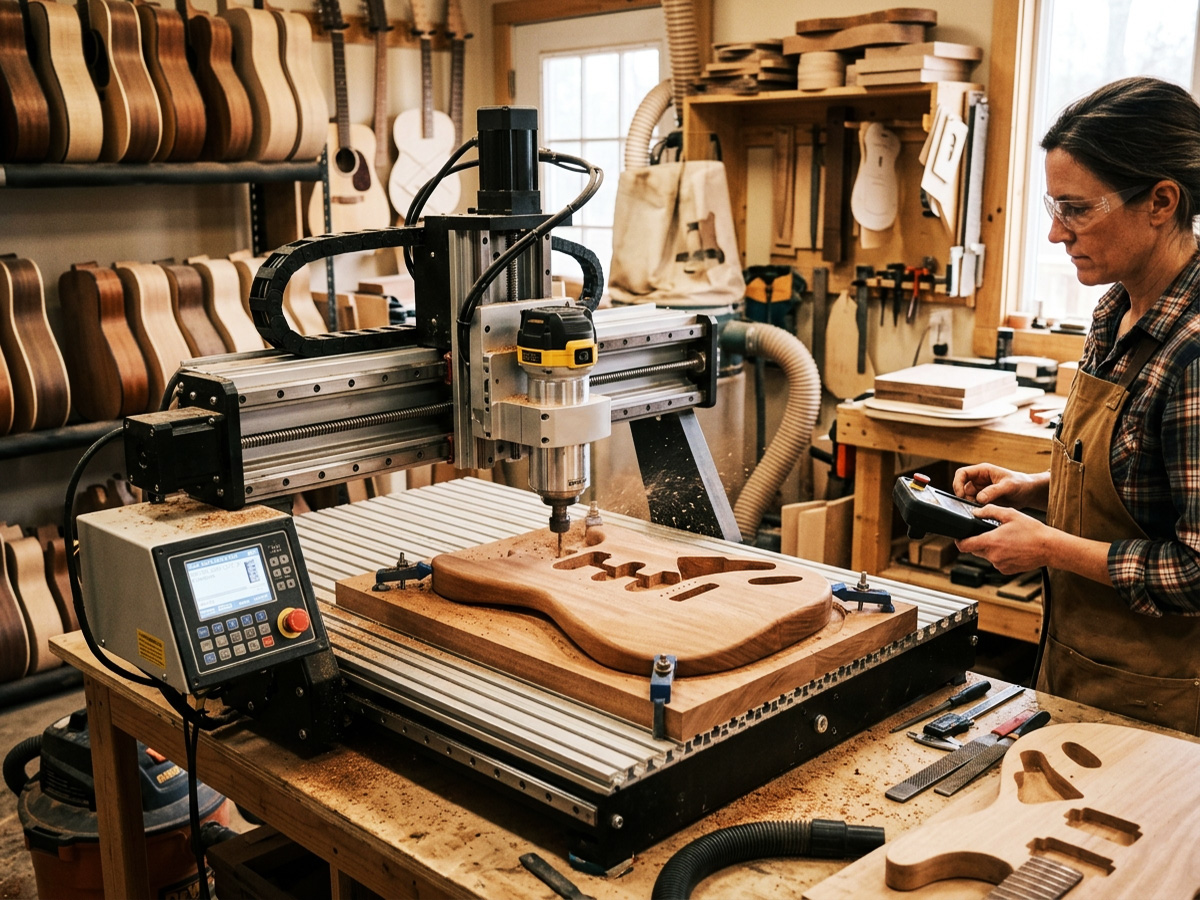
CNC-veistos poistaa myös käsintehtyjen soittimien epäjohdonmukaisuuden. Jokainen ontelo, säde ja muoto kopioidaan varmennetuista CAD-tiedostoista, joten kymmenes tuotantolinjalta tuleva kitara kuulostaa ja soi identtisesti ensimmäisen kanssa.
| Mittaus | Käsin rakennettu | CNC-jyrsitty |
|---|---|---|
| Kehonmuokkausaika | 6-8 tuntia | 45 – 90 minuuttia |
| Kaulanveistoaika | 2–3 päivää | 3-4 tuntia |
| Mitattoleranssi | ±0.5 mm tyypillinen | ±0.05 mm saavutettavissa |
| Materiaalihävikkiaste | 15-25% | 5-10% |
| Erän johdonmukaisuus | Muuttuja | Identtinen CAD-tiedoston mukaan |
CNC-koneistettujen kitaran osien kysyntä kasvaa
Maailmanlaajuisten kitaramarkkinoiden arvoksi arvioitiin noin 12.7 miljardia Yhdysvaltain dollaria vuonna 2025, ja niiden ennustetaan kasvavan noin 7.5 prosentin vuotuisella yhdistetyn kasvuvauhdilla alkuvuodesta lähtien. 2030s. Mittatilaustyönä ja putiikkimaisesti valmistetut soittimet edustavat yhtä nopeimmin kasvavista segmenteistä, ja tilausmäärät mittatilaustyönä tehtävissä korjaamoissa ovat saavuttaneet ennennäkemättömän korkeat tasot.
Verkkomarkkinapaikat, kuten Reverb, Etsy ja eBay, ovat tehneet pienten kitaroiden rakentajien tavoittamisen maailmanlaajuisesti huomattavan helpoksi. Pelkästään käytettyjen ja putiikkikitaroiden myynti edustaa useiden miljardien dollarien vuosittaisia markkinoita, jotka kasvavat yli 5% vuodessa.
• Noin 45–49 % uusista kitaristeista vuodesta 2020 lähtien on naisia, mikä laajentaa ostajakuntaa dramaattisesti
• Aloittelijan kitarat alle $200 vastaa noin 60% kappalemääräisestä myynnistä, mikä luo valtavan kysynnän edullisille ja hyvin valmistetuille komponenteille
• Kitaramyynti verkossa edustaa nyt 38–40% kaikista Yhdysvaltojen kitaraostoista
• Personointitarpeet ovat kasvaneet räjähdysmäisesti, ja ostajat etsivät yksilöllisiä korin muotoja, upotuksia ja viimeistelyjä.
Mitä voit tehdä ja myydä: Tuoteluettelo hinnoitteluineen?
CNC-kitaranvalmistusyritys ei rajoitu kokonaisiin soittimiin. Komponenttien myynti, lisävarusteet ja täydentävät tuotteet avaavat useita tulonlähteitä. Alla on tuoteluettelo, jossa on CNC-koneella valmistettujen tuotteiden likimääräiset yksikköhinnat.
| Tuotteet | Materiaali | Hintaluokka | Myyntikanava |
|---|---|---|---|
| Sähkökitaran runko (tyhjä) | Leppä, saarni, lehmus | $ 60- $ 150 | Reverb, eBay, suorat tilaukset |
| Akustisen kitaran runkosarja | Kuusi, mahonki | $ 120- $ 300 | Soitinrakentajien tarvikkeiden jälleenmyyjät |
| Kitaran kaula (vaahtera/ruusupuu) | Vaahtera, mahonki | $ 50- $ 180 | Kaiku, Etsy, tukkumyynti |
| Otelauta / otelauta | Eebenpuu, ruusupuu, vaahtera | $ 20- $ 60 | Soitinrakentajien toimitus suoraan |
| Vetopäällystys / viilu | Eebenpuu, eksoottiset lehtipuut | $ 8- $ 25 | Etsy, soitinrakentajien foorumit |
| Mukautetut upotukset (otelauta/rosetti) | MOP, merikorva, akryyli | $ 15- $ 80 | Suora, Kaiku, Etsy |
| Plektrasuojukset | Akryyli, puu, selluloidi | $ 10- $ 40 | Amazon, kaiku, suora |
| Kitaraplektrat (mittatilaustyönä brändätyt) | Akryyli, Puu, Sarvi | 2–8 dollaria kappale | Etsy, bändituotteet, tukkumyynti |
| Kitaratelineet / seinätelineet | Kovapuu, vaneri | $ 25- $ 75 | Amazon, Etsy, musiikkikauppiaat |
| Mukautetut kitarakoteloiden insertit | Vaahtomuovi + vanerikuori | $ 40- $ 120 | Suora, Kaiku |
| Jigit ja mallit rakentajille | MDF-levy, akryyli | $ 15- $ 50 | Soitinrakentajien foorumit, Etsy |
Oikean CNC-reitittimen valitseminen kitaranrakennukseen
Oikean koneen valinta riippuu tuotantomäärästä, työtilasta ja budjetista. Kompakti 600 × 900 mm:n jyrsin käsittelee hyvin yksittäisiä kitaran runkoja ja kauloja, kun taas täysikokoinen 4x8 CNC-puun reititin mahdollistaa useiden osien sijoittamisen yhdelle arkille, mikä maksimoi erätuotannon läpimenon.
Verstaissa, jotka leikkaavat erilaisia profiileja (ruumiinonteloita, kaulataskuja, upotettuja taskuja), ATC CNC-jyrsin automaattisella työkalunvaihtajalla eliminoi manuaalisen teränvaihdon ja säästää merkittävästi aikaa usean toiminnon sahauksissa. 2.2–3.0 kW:n kara tarjoaa riittävästi tehoa lehtipuille, kuten vaahteralle ja mahonkille. Suuremmissa kaupallisissa operaatioissa 4.5 kW:n tai tehokkaampi kara yhdessä alipainepidikkeen kanssa tarjoaa teollisuusluokan suorituskyvyn.
Suositellut konekokoonpanot
| Asteikko | Työ alue | Kara | Best For |
|---|---|---|---|
| Harrastus / Startup-yritys | 600 × 900 mm | 1.5-2.2 kW | Yksittäisen rungon/kaulan tuotanto, prototyyppien valmistus |
| Pieni työpaja | 1300 × 2500 mm | 3.0-4.5 kW | Eräkappaleet, sisäkkäinen leikkaus, jigien valmistus |
| Tuotantokauppa | 1500 × 3000 mm+ | 4.5–9.0 kW + ATC | Suurtuotanto, moniosainen nestaus |
CNC-kitaran osien materiaalisuositukset
Puun valinta vaikuttaa suoraan äänenlaatuun, työstettävyyteen ja jälleenmyyntiarvoon. Alla on lueteltu yleisimmät CNC-kitaroiden valmistuksessa käytetyt materiaalit ja niiden tyypilliset käyttötarkoitukset.
• Leppä / Lehmus: Kevyt, helposti työstettävä, erinomainen sähkökitaroiden runkoihin. Fender-tyylisten kitaroiden rakentajien suosima.
• Ash (Swamp Ash): Avoinsyinen, kirkas sävy. Suosittu Telecaster- ja Stratocaster-tyylisissä kitaroissa.
• Mahonki: Lämmin, täyteläinen ääni ja erinomainen sustain. Vakiotyyppi Les Paul -tyylisissä rungoissa ja akustisten kitaroiden pohjissa/sivuissa.
• Vaahtera: Tiheä ja kirkas. Käytetään kauloihin, otelaudoihin ja rungon kansiin. Vaatii terävät työkalut ja hitaampia syöttönopeuksia CNC-koneilla.
• Kuusi: Akustisten kitaroiden ensisijainen kaikupohjapuu. Kevyt, jäykkä ja resonoiva.
• Eebenpuu / Ruusupuu: Ensiluokkaiset otelaudan puut. Tiheässä ja öljypitoisessa materiaalissa käytetään kovametallityökaluja ja alhaisempia karannopeuksia.
Lisäarvoa laserkaiverruksella ja intarsiatyöllä
Otelaudan upotukset, ruusukkeet ja lapalogot ovat arvokkaita lisäyksiä, jotka erottavat kustomoidut kitarat massatuotetuista soittimista. CNC-jyrsin hoitaa taskuleikkauksen rungon ja akryyliupotusten osalta, kun taas laser kaiverrus kone lisää monimutkaisia koristeellisia kaiverruksia, sarjanumeroita ja brändättyjä logoja suoraan puu-, luu- tai akryylipinnoille.
Yhdistämällä a CNC-reititin laserlevittimen avulla työpajallesi on mahdollista tarjota täysin räätälöityjä instrumentteja premium-hintaan. Monet menestyneet soitinrakentajayritykset raportoivat, että pelkästään räätälöidyt intarsia- ja kaiverruspalvelut tuottavat 20–30% kokonaistuloista.
Liiketoiminnan ROI: Investointien ja tuoton erittely
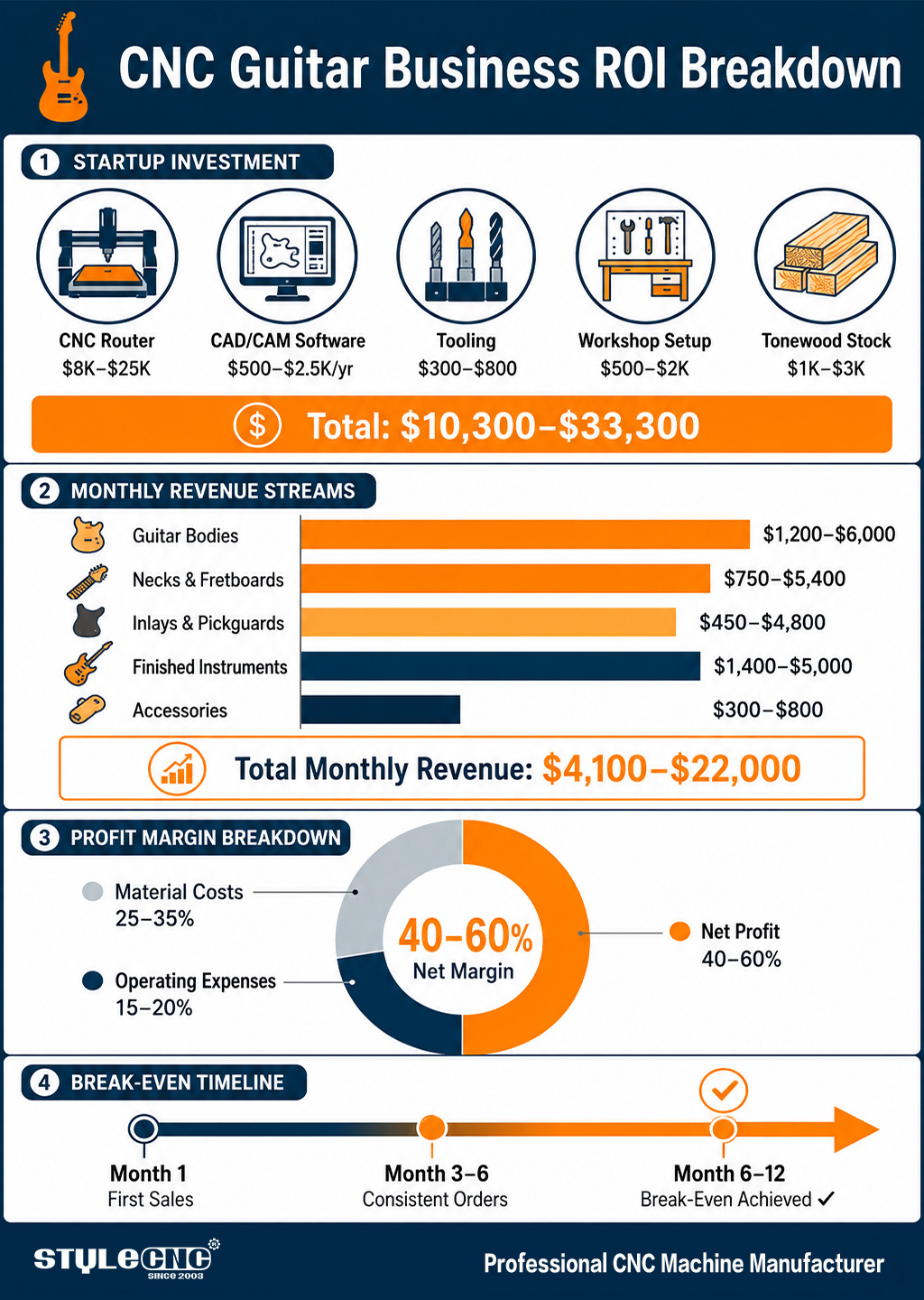
Taloudellisen tilanteen ymmärtäminen on olennaista ennen lanseerausta. Tässä on realistinen sijoitetun pääoman tuottoennuste, joka perustuu pieneen työpajaan, joka tuottaa CNC-kitaran osia ja valmiita instrumentteja.
| Sijoituskohde | Kustannusarvio |
|---|---|
| CNC-jyrsin (3-akselinen, ATC, 1300 × 2500 mm) | $ 8,000- $ 25,000 |
| CAD/CAM-ohjelmistot (Fusion 360, VCarve jne.) | 2 016–2 400 dollaria/vuosi |
| Työkalut (jyrsimet, kuulapääjyrsimet, V-kärjet) | $ 300- $ 800 |
| Pölynkeräys ja työpajan asetukset | $ 500- $ 2,000 |
| Alkuperäinen sävypuuvarasto | $ 1,000- $ 3,000 |
| Startup-investointien kokonaismäärä | $ 10,300- $ 33,300 |
Kuukausittainen tuloennuste (pieni työpaja)
| Tulovirta | Yksikköä / kuukausi | Kuukausittaiset tulot |
|---|---|---|
| Kitaran rungot (sähkökitarat) | 20-40 | $ 1,200- $ 6,000 |
| Kaulat ja otelaudat | 15-30 | $ 750- $ 5,400 |
| Mukautetut upotukset ja plektrasuojat | 30-60 | $ 450- $ 4,800 |
| Valmiit soittimet | 2-5 | $ 1,400- $ 5,000 |
| Tarvikkeet (plektrat, telineet, jigit) | 50-100+ | $ 300- $ 800 |
| Arvioidut kuukausitulot yhteensä | - | $ 4,100- $ 22,000 |
Materiaalikustannusten ollessa keskimäärin 25–35 % tuloista ja käyttökulujen ollessa noin 15–20%, nettovoittomarginaalit 40–60% ovat saavutettavissa hyvin johdetuille CNC-kitarayrityksille. Useimmat työpajat saavuttavat kannattavuusrajan 6–12 kuukauden kuluessa tasaisen tuotannon alkamisesta.
Kuinka tavoittaa ostajasi
CNC-koneistettujen kitaran osien ja instrumenttien myynti vaatii monikanavaista lähestymistapaa. Tässä ovat tehokkaimmat strategiat, joita rakentajat käyttävät asiakkaiden löytämiseen ja säilyttämiseen.
✓ Reverb.com – Suurin soittimille ja osille tarkoitettu markkinapaikka. Alhaiset listausmaksut, sisäänrakennettu ostajien luottamus ja vahva hakukoneoptimointi kitaran osille.
✓ Etsy – Ihanteellinen räätälöityihin intarsioihin, brändättyihin plektraaneihin, ainutlaatuisiin lapapään päällekkäiskappaleisiin ja käsityöläisasusteisiin.
✓ eBay / Amazon – Suuri määrä standardoituja runkoja, kauloja ja metalliosasarjoja.
✓ Suora verkkosivusto Shopifyn avulla – Rakenna brändiäsi, esittele räätälöityjä tuotteita ja hanki korkeammat katteet myymällä suoraan kuluttajille.
✓ Musiikkikauppiaat ja -jakelijat – Tukkukauppakumppanuudet kaupoille ja ketjuille.
✓ Sosiaalisen median yhteisöt – Foorumit, kuten LMI, StewMac-yhteisö ja sosiaalisen median ryhmät, yhdistävät sinut ammattimaisiin rakentajiin, jotka tarvitsevat luotettavia komponenttitoimittajia.
Yleisiä virheitä, joita on vältettävä
CNC-kitarayrityksen aloittaminen vaatii oppimiskäyrän. Nämä ovat sudenkuopat, jotka kompastavat useimpia uusia rakentajia:
• Prototyyppien ohittaminen: Tee aina koesahaus edullisesta poppelista tai MDF-levystä ennen ensiluokkaisten puulajien työstöä.
• Väärät syöttönopeudet lehtipuille: Tiheät puut, kuten vaahtera ja eebenpuu, vaativat hitaampia syöttönopeuksia ja teräviä kovametallityökaluja repeytymisen estämiseksi.
• Pölynkeräyksen laiminlyönti: Hieno puupöly vahingoittaa karan laakereita ja kiskoja. Panosta asianmukaiseen imurointiin ensimmäisestä päivästä lähtien.
• Ei laadunvalvontaprosessia: Mittaa jokainen erä paksuusmitalla. Jopa 0.2 mm:n poikkeama kaulataskussa vaikuttaa soittettavuuteen.
• Työn alihinnoittelu: Ota huomioon koneen käyttöaika, materiaali, viimeistely, toimituskulut ja markkinapaikkamaksut ennen hinnoittelua.
• Liiallinen luottaminen pelkästään CNC-koneeseen: Lopullinen hionta, nauhojen työstö, viimeistely ja kokoaminen tehdään edelleen käsin. CNC hoitaa karkean ja tarkan muotoilun, ei koko rakennelmaa.
Aloittaminen: Vaiheittainen tarkistuslista
Noudata tätä järjestystä siirtyäksesi ideasta ensimmäiseen myyntiin mahdollisimman nopeasti.
1. Tutki omaa markkinarakoasi: sähkökitararunkoisetit, akustiset setit, lisävarusteet vai kaikki kolme.
2. Valitse ja tilaa CNC-jyrsin. Tutustu vaihtoehtoihin alla olevasta STYLECNC puuntyöstö CNC-jyrsimien luettelo vastaamaan budjettiasi ja tuotantotavoitteitasi.
3. Asenna CAD/CAM-ohjelmisto (Fusion 360, VCarve Pro tai Aspire) ja opettele kitarakohtaiset työstöradat.
4. Hanki sävypuut hyvämaineisilta toimittajilta (Gilmer Wood, Cook Woods tai paikallisilta sahoilta kierrätyspuuta).
5. Tee prototyypit ensimmäisistä malleistasi MDF- tai poppelilevystä ennen kuin sitoudut premium-aihioihin.
6. Luo myyjätilit Reverbiin, Etsyyn ja omaan Shopify-kauppaasi.
7. Valokuvaa ja listaa tuotteesi yksityiskohtaisine teknisine tietoineen, puulajeineen ja CNC-tarkkuusväitteineen.
8. Luo sosiaalisen median näkyvyys (Instagram, YouTube, TikTok) ja näytä CNC-prosessisi rakennusvideoita, jotka konvertoivat erittäin hyvin.
Katso: CNC-jyrsin kitaran rungon valmistamiseksi
Katso a STYLECNC jyrsin toiminnassa, muotoilemassa kitaran runkoa raakapuuaihiosta. Katso koko videodemonstraatio: CNC-jyrsin DIY-kitaran runko.
Usein Kysytyt Kysymykset
Minkä kokoisen CNC-jyrsimen tarvitsen kitaroiden tekemiseen?
Yksittäisten kappaleiden ja kaulojen käsittelyyn tarvitaan vähintään 600 × 900 mm:n työalue. Erätuotantoon ja levyjen nestaukseen suositellaan vähintään 1300 × 2500 mm:n kokoista pöytää.
Paljonko CNC-kitaranvalmistusyrityksen perustaminen maksaa?
Aloittelijan asetukset alkavat noin $10 000–15 000 dollaria, mukaan lukien jyrsin, ohjelmisto, työkalut ja lähtömateriaalit. Tuotantolaatuiset työpajat vaativat yleensä $20,000–3 000 dollaria.
Voinko käyttää CNC:tä akustisiin kitaroihin, ei vain sähkökitaroihin?
Kyllä. CNC-jyrsijät koneistavat akustisten kitaroiden tukirakenteita, kaulapalkkeja, ruusukkeita, tallalevyjä ja rungon muotteja. Monet akustisten kitaravalmistajat käyttävät CNC-konetta kaikkien rakenneosien valmistukseen ja varaavat käsityön äänentoistoon ja lopulliseen kokoonpanoon.
Mikä CAD/CAM-ohjelmisto toimii parhaiten kitaranrakennukseen?
Fusion 360, VCarve Pro ja Aspire ovat suosituimpia kitaranrakentajien keskuudessa. Ilmaiset vaihtoehdot, kuten FreeCAD, toimivat perus-2D-profiilien kanssa, mutta 3D Kaulan veistäminen vaatii tyypillisesti Fusion 360:n tai MeshCAMin.
Onko CNC-kitaranrakennus kannattavaa sivuliiketoimintana?
Ehdottomasti. Jopa 10–20 kitaran rungon ja kaulan myyminen kuukaudessa Reverbissä tai Etsyssä voi tuottaa $1500–4 000 dollaria tuloja ja 40–60% katteet tekevät siitä käyttökelpoisen sivutulon päivätyön ohella.
Korvaako CNC kitaranvalmistuksessa käsityöläisyyden?
Ei. CNC hoitaa tarkkuusmuokkauksen, onteloiden jyrsinnän ja toistuvia tehtäviä. Loppuhionta, nauhojen työstö, viimeistely, asennus ja laadunvalvonta ovat edelleen olennaisia käsityötaitoja, jotka määrittelevät rakentajan maineen.